
Search Utah Traffic Ticket Records
Utah traffic ticket records are public documents maintained by the state court system and available through multiple official channels. You can look up traffic citations, check case status, view fines, and access your driving history through the Utah State Courts website, the MyCase portal, and the Utah Driver License Division. This guide covers how to find Utah traffic ticket records online, by mail, or in person at courthouses across all 29 counties.
Utah Traffic Ticket Records Quick Facts
How Utah Traffic Ticket Records Work
When a law enforcement officer in Utah issues a traffic citation, that ticket becomes a court record. The issuing officer files the citation with the justice court or district court that has jurisdiction over the area where the stop occurred. From that point, the traffic ticket record is accessible through the Utah court system. You can find the case, check its status, and see what fines or penalties apply.
Utah handles most traffic violations through justice courts, which are limited jurisdiction courts found in cities and counties across the state. Serious offenses, including felony traffic crimes, go to the district court. Every ticket gets a case number. The courts log all activity on that case, including payments, hearings, continuances, and outcomes. Those records stay in the court system for years and are available to the public under the Utah Government Records Access and Management Act, commonly known as GRAMA, which is found under Utah Code § 63G-2.
There is a second source for Utah traffic ticket records: the Utah Driver License Division. The DLD keeps a driving history for every licensed driver in the state. When you get convicted of a moving violation, that conviction goes on your driving record. The DLD uses these records to track points and take action against licenses when drivers accumulate too many violations.
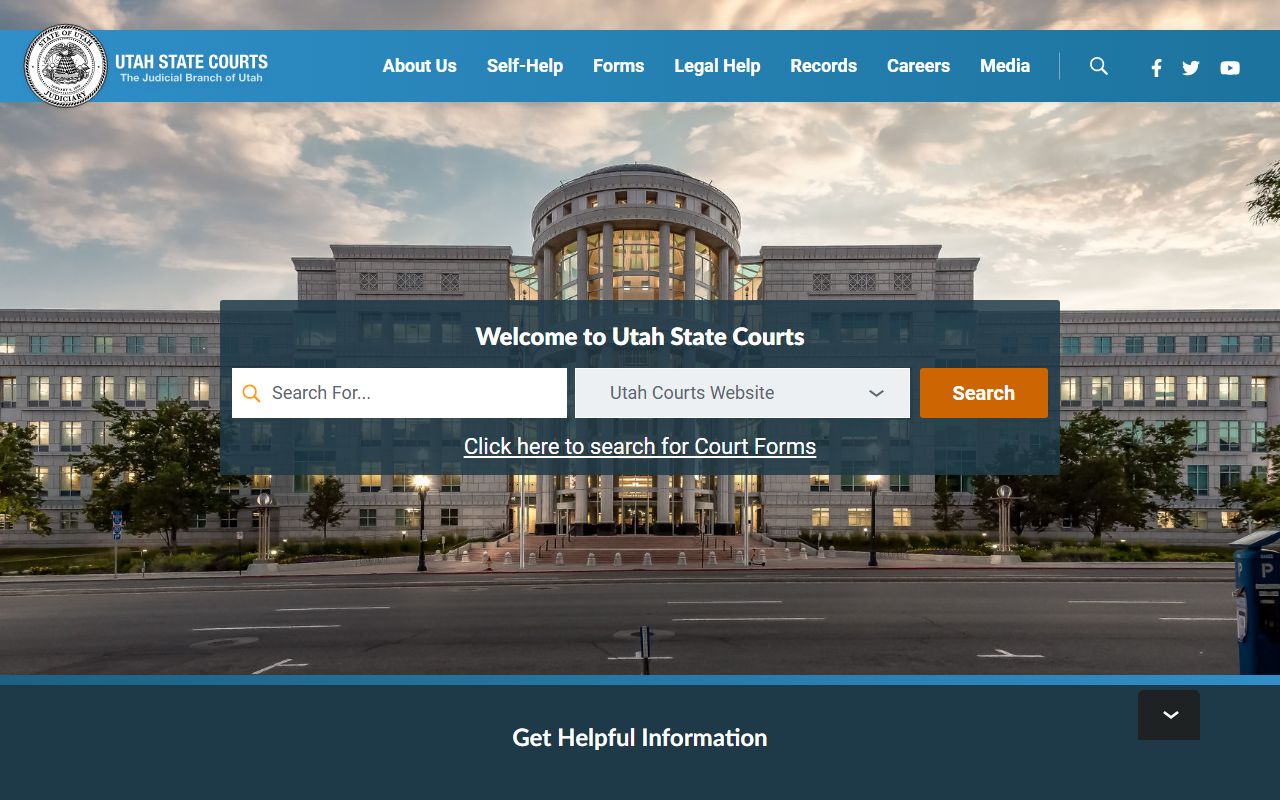
The Utah State Courts website is the central portal for all court-related traffic ticket records in Utah. The site gives access to case search tools, payment systems, and self-help resources for anyone dealing with a traffic citation.
Search Utah Traffic Ticket Records Online
The fastest way to look up a traffic ticket record in Utah is through the state's online court tools. Two main options exist: XChange and MyCase. They serve different purposes, and knowing which one to use saves time.
XChange is the Utah State Courts subscription-based case management system. It gives access to district and justice court records statewide. You can search by case number, party name, citation number, or attorney. Results include case summaries, party information, and document availability. Access requires registration. A one-time use account starts at $5.00, with searches costing $0.20 each and documents at $0.50 each. A monthly subscription runs $40.00 per month after a $25.00 setup fee and covers 500 searches per billing cycle. XChange holds cases filed after January 1, 1999 in most courts.
MyCase is free. It is the public-facing portal where you can look up your own case details. You need your case number or citation number and your name as it appears on the ticket. Through MyCase, you can view scheduled hearing dates, see filed documents, make payments, and track the status of your case. No subscription is required for basic lookups.
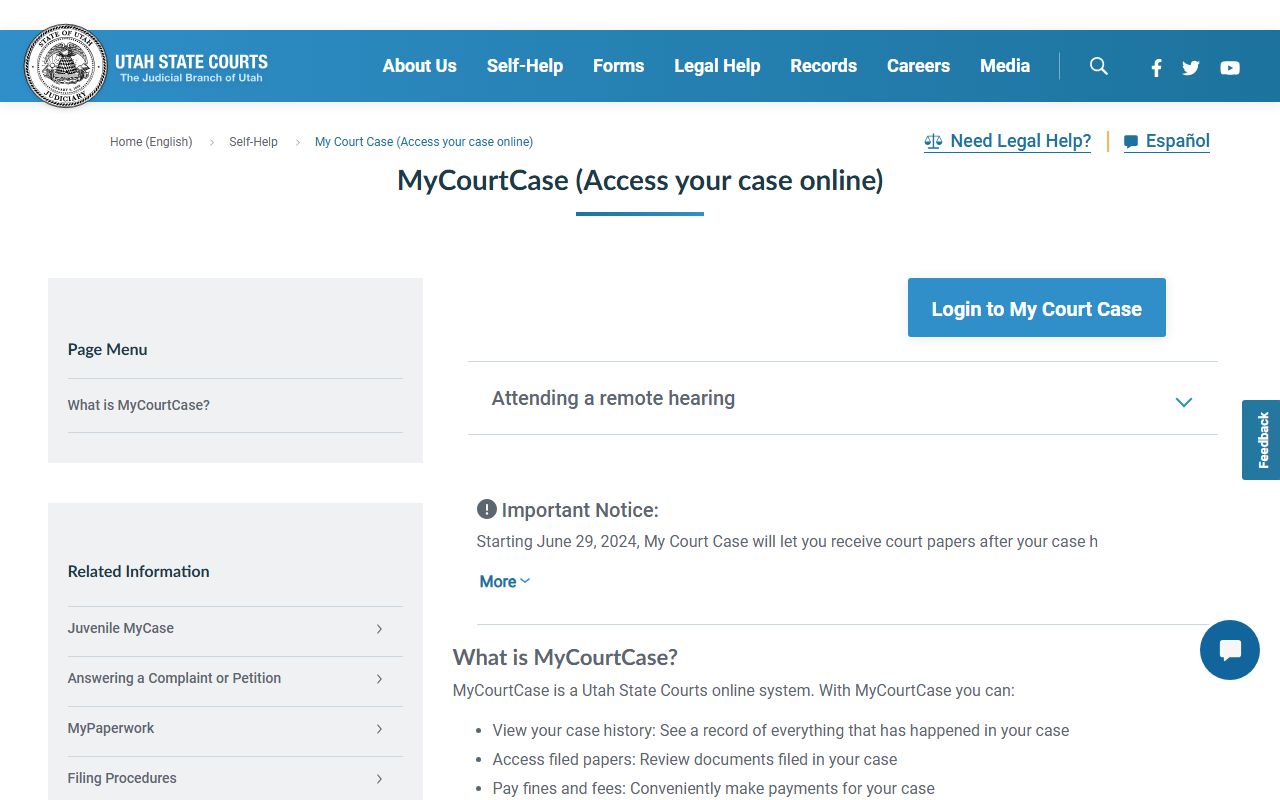
The MyCase portal lets you check your traffic ticket status for free. Enter your citation number or case number to see what is owed and when your next court date is.
Pay a Utah Traffic Ticket Online
Utah courts offer an online payment system for most traffic fines. You do not need to go to the courthouse to pay. The ePayments system at utcourts.gov/epayments/ handles payments for both district and justice court cases across the state.
To pay online, you need your citation number or case number. The system lets you search, add the case to your payment cart, and pay by credit card. Visa, MasterCard, and Discover are accepted. Debit cards and electronic checks also work. Note that some violations require a mandatory court appearance and cannot be paid online. Active warrants also cannot be resolved through the online payment portal. Call the court first if you are not sure whether your ticket requires an appearance.
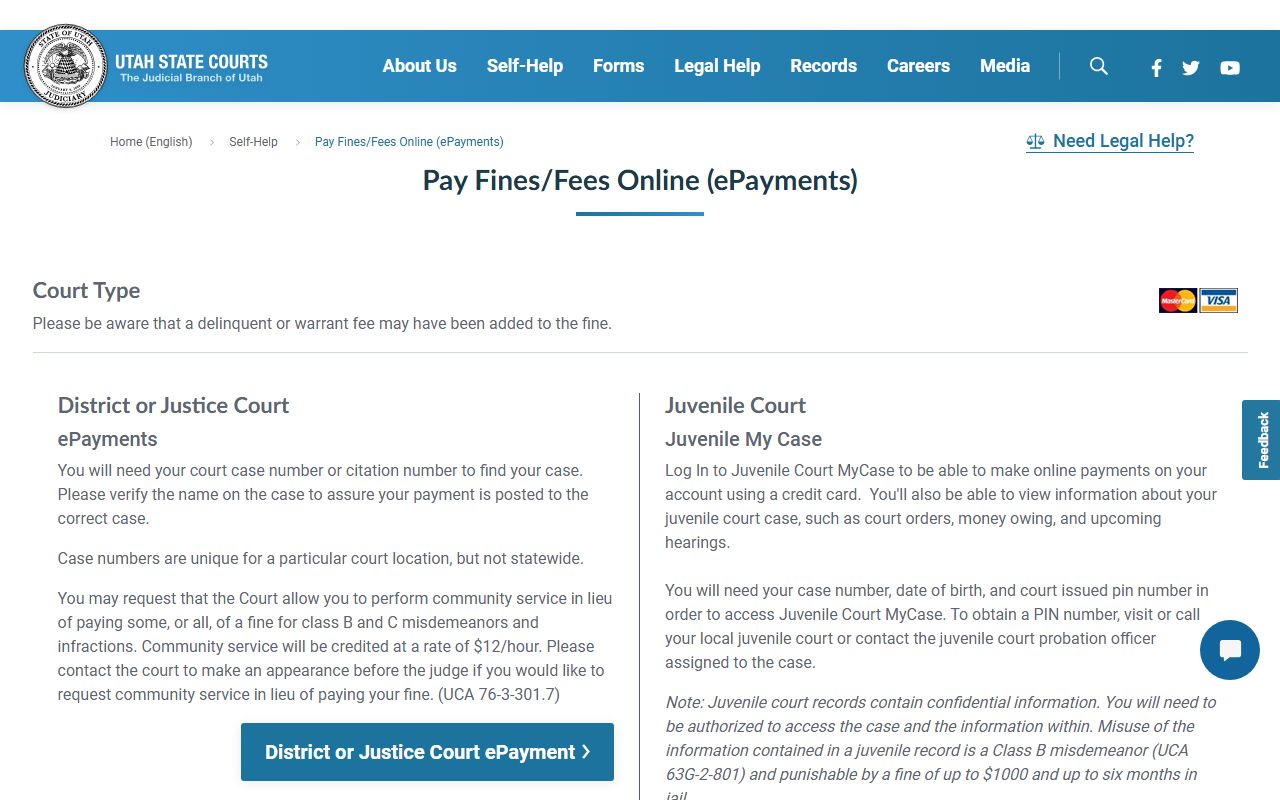
Use the Utah Courts ePayments portal to pay traffic fines with a credit card or electronic check. A convenience fee may apply depending on your payment method.
Utah Deferred Traffic Prosecution
Utah offers a program called Deferred Traffic Prosecution that can result in a traffic citation being dismissed. This is a good option for eligible drivers who want to avoid a conviction on their record. The program has specific requirements, and not every ticket qualifies.
To be eligible, you must hold a Utah license and be at least 21 years old. The citation must have been issued within the past 21 days. You must have had no more than one other traffic offense in the past 12 months in any jurisdiction, and fewer than four traffic offenses in the past five years total. Violations that require a mandatory court appearance do not qualify, and neither do citations for speeding more than 20 miles per hour over the posted limit. Accidents generally disqualify you unless the prosecutor specifically approves.
If you qualify, you pay the violation fee plus a $25 deferred prosecution fee and complete a traffic school course within 60 days. Stay citation-free during that time and the case is dismissed. No points go on your driving record. Under the Deferred Prosecution track, the conviction is never reported to the Utah Driver License Division at all. The Plea in Abeyance track is slightly different: you enter a guilty plea, but the case is dismissed upon completion and reported as a dismissal rather than a conviction.
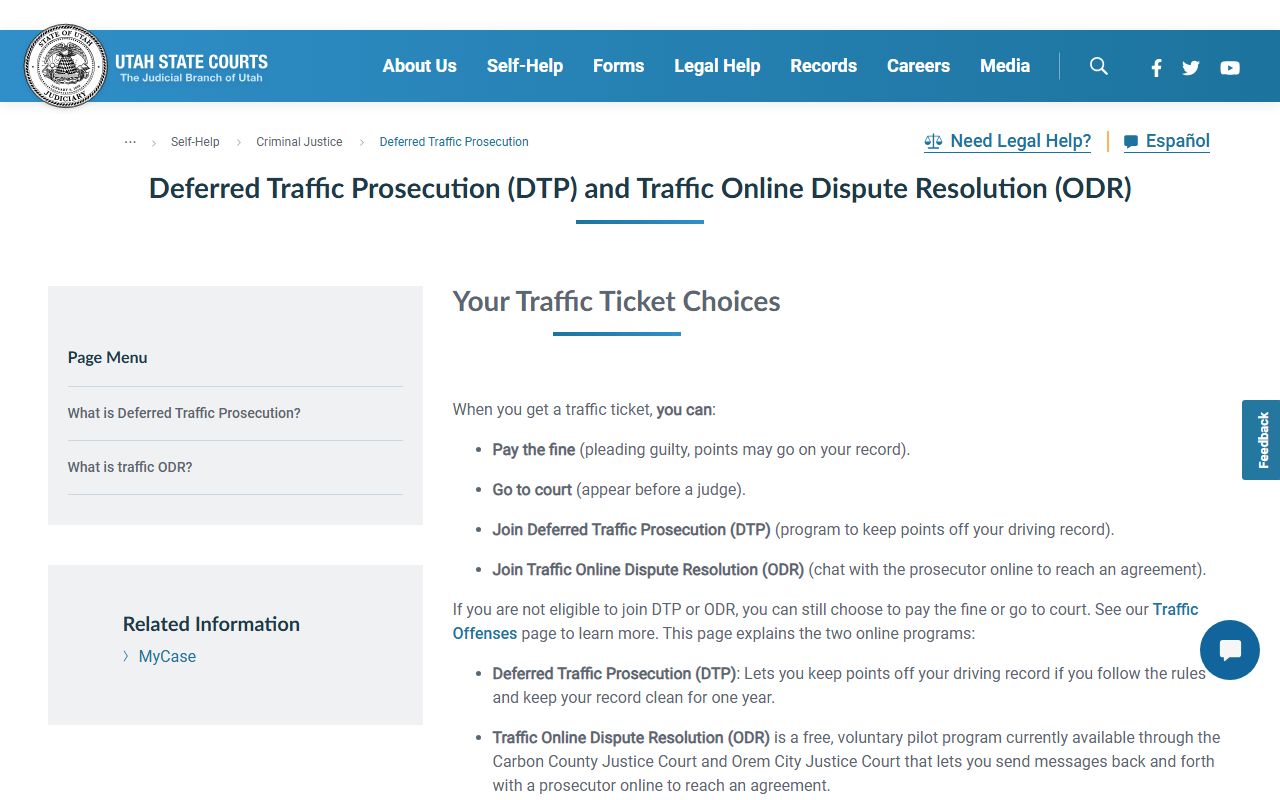
The Utah Deferred Traffic Prosecution page explains eligibility, fees, and steps to complete the program and get your traffic ticket dismissed.
Utah Driver License Division Records
The Utah Driver License Division maintains official driving records for all licensed drivers in the state. These records are separate from court case records. A DLD driving history shows your moving violations, suspensions, revocations, and license status. The DLD uses this record to manage your driving privileges.
You can get a copy of your own driving record through the DLD. A non-certified Motor Vehicle Record costs $8.00. A certified copy costs $10.75 for the first 15 pages. You can order online through Utah.gov if you are 21 or older, in person at a DLD office with an appointment, or by mail using Form DLD60. For certified records, processing takes up to two weeks.
The DLD holds most moving violations on your record for three years. DUI convictions and drug-related offenses stay for 10 years. Suspensions and revocations are also kept for 10 years. Third parties such as employers can request your driving record if they have a permissible purpose under the Driver's Privacy Protection Act. They must register with Utah.gov and sign the required affirmation.
- Non-certified MVR: $8.00
- Certified MVR: $10.75 for first 15 pages
- Form DLD60 for mail requests
- In-person requires appointment
- Most violations retained 3 years; DUI stays 10 years
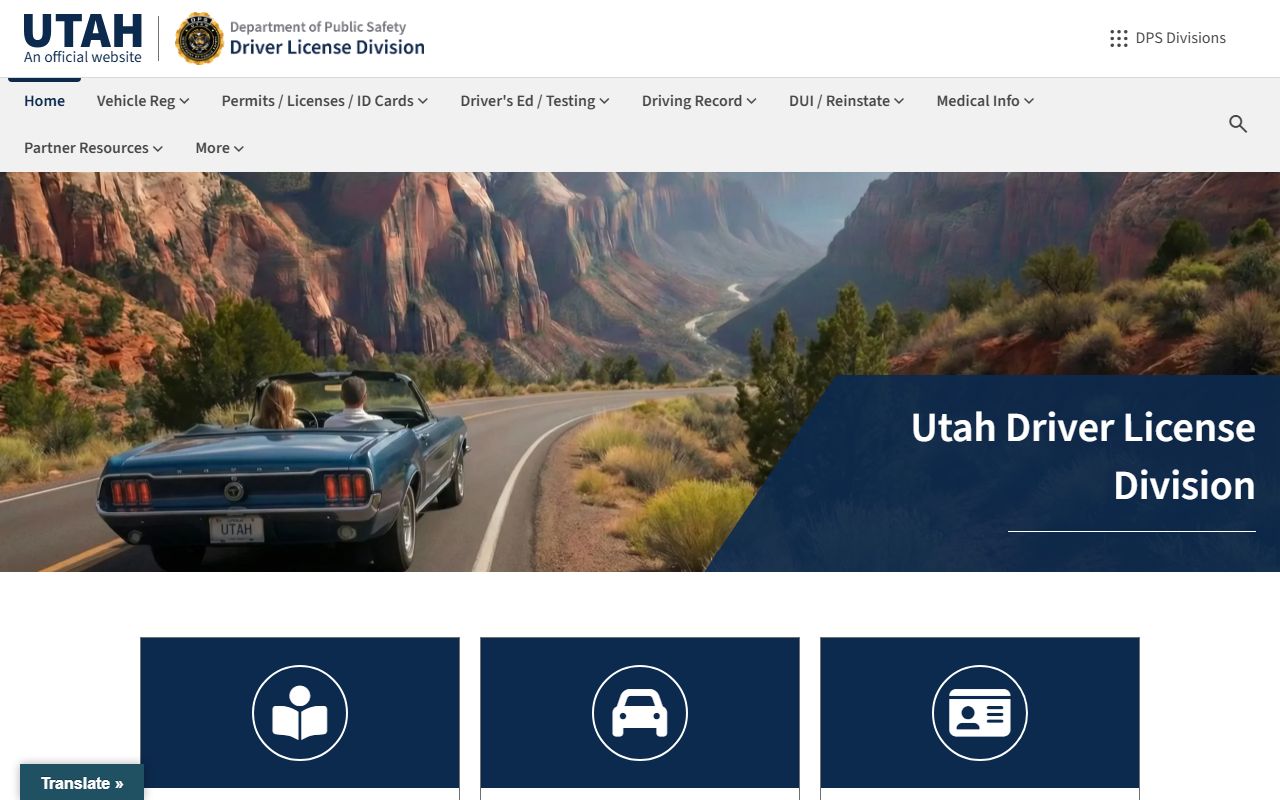
The Utah Driver License Division website lets you request your driving history, manage your license status, and learn about point-based suspension thresholds.
Utah Traffic Violations and Penalties
Utah classifies traffic violations into several categories, each carrying different consequences. Knowing where your ticket falls helps you understand what is at stake.
Infractions are the least serious category. Common infractions include speeding 1 to 10 mph over the limit, failure to signal, not wearing a seatbelt, and expired registration. Fines for infractions run up to $750 under Utah Code Title 41, Chapter 6a, which governs all traffic matters in the state. Jail time is rarely imposed for infractions but remains technically possible.
Class B misdemeanors are more serious. DUI on a first offense, reckless driving, speeding 31 or more miles per hour over the limit, hit and run, and drag racing all fall here. Fines go up to $1,000 and jail up to 180 days. A first DUI can also bring a license suspension of up to one year. Class A misdemeanors carry fines up to $2,500 and up to 364 days in jail. At the top end, felony traffic offenses, including multiple DUIs and hit and run with injury, can mean prison time under Utah Code § 76-3-203.
Utah also uses a point system to track driver behavior. Reckless driving carries 80 points. Speeding violations run from 35 to 75 points depending on how far over the limit you were. Failure to yield is 60 points, following too closely is 60 points, and running a red light or stop sign is 50 points. Most other moving violations add 40 points. Drivers 21 and older face a suspension of three months to one year when they accumulate 200 or more points in a three-year period. Drivers under 21 face suspension at 70 points. Points drop by 50 percent after one year without a moving violation and clear entirely after two clean years.
Utah Bureau of Criminal Identification
Some traffic offenses are criminal in nature and appear on a person's criminal record, not just their driving record. The Utah Bureau of Criminal Identification handles criminal history background checks and maintains records related to these more serious traffic crimes.
The BCI processes expungements for traffic offenses that qualify. To expunge a traffic conviction in Utah, you first need a Certificate of Eligibility from the BCI. The fee is $20. After receiving the certificate, you have 90 days to file a Petition to Expunge with the court. The BCI review takes one to three months. DUI and reckless driving offenses generally do not qualify for expungement. Most other traffic crimes can be expunged after three to four years depending on severity.
The BCI is located at 4315 South 2700 West Suite 1300, Taylorsville, UT 84129. The phone number is (801) 965-4445. Office hours are Monday through Friday, 8:00 AM to 5:00 PM. Warrant information is also maintained by the BCI. You can check for active warrants free of charge through bci.utah.gov.
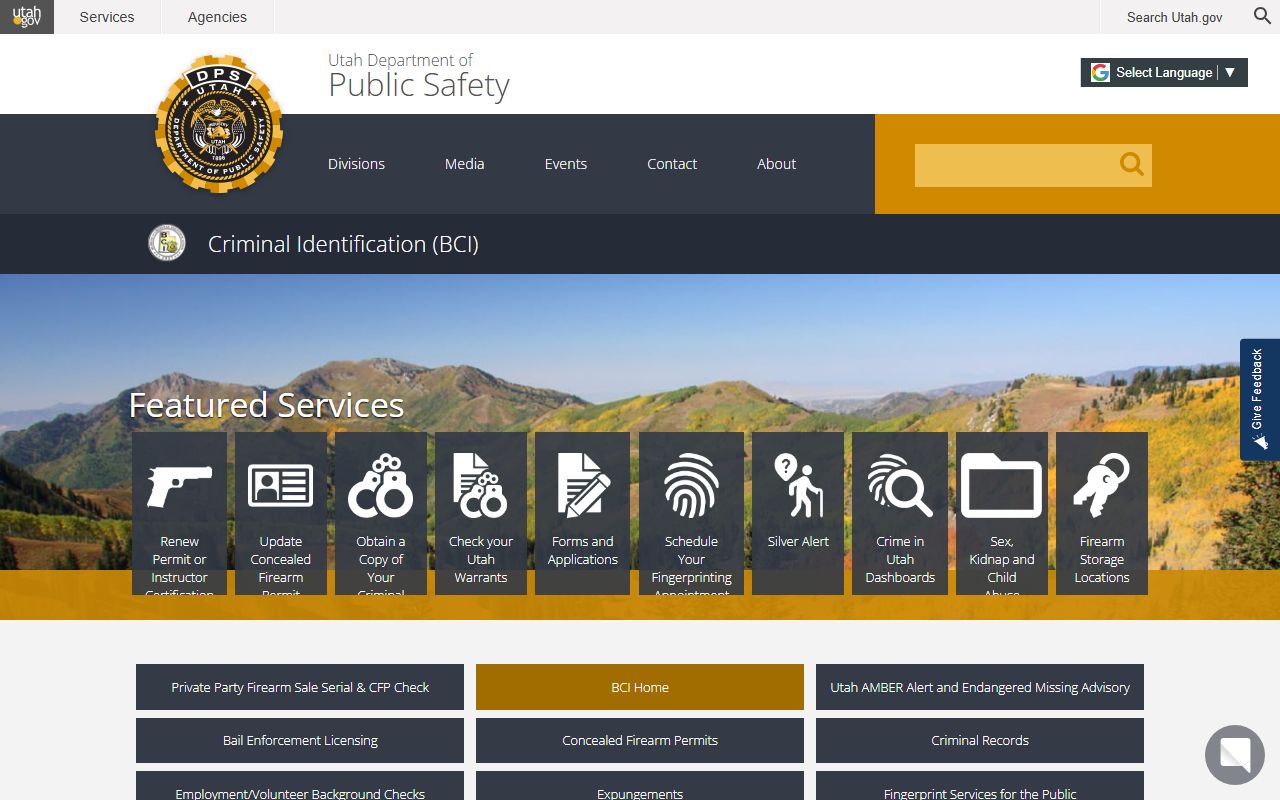
The Utah Bureau of Criminal Identification handles criminal history checks, expungements, and warrant searches for serious traffic offenses that carry criminal penalties.
Out-of-State Tickets and the Driver License Compact
Utah participates in the Driver License Compact, an agreement among most U.S. states to share traffic violation information. Under Utah Code § 53-3-604, Utah reports traffic convictions to a driver's home state and receives reports of Utah-licensed drivers who are convicted in other states.
What this means in practice: if you hold a Utah license and get a speeding ticket in Nevada, that conviction can appear on your Utah driving record. If you are an out-of-state driver who gets ticketed in Utah, Utah reports the conviction to your home state. Your home state then applies its own rules about points and penalties. You still need to resolve the Utah traffic ticket records through the Utah courts before you leave.
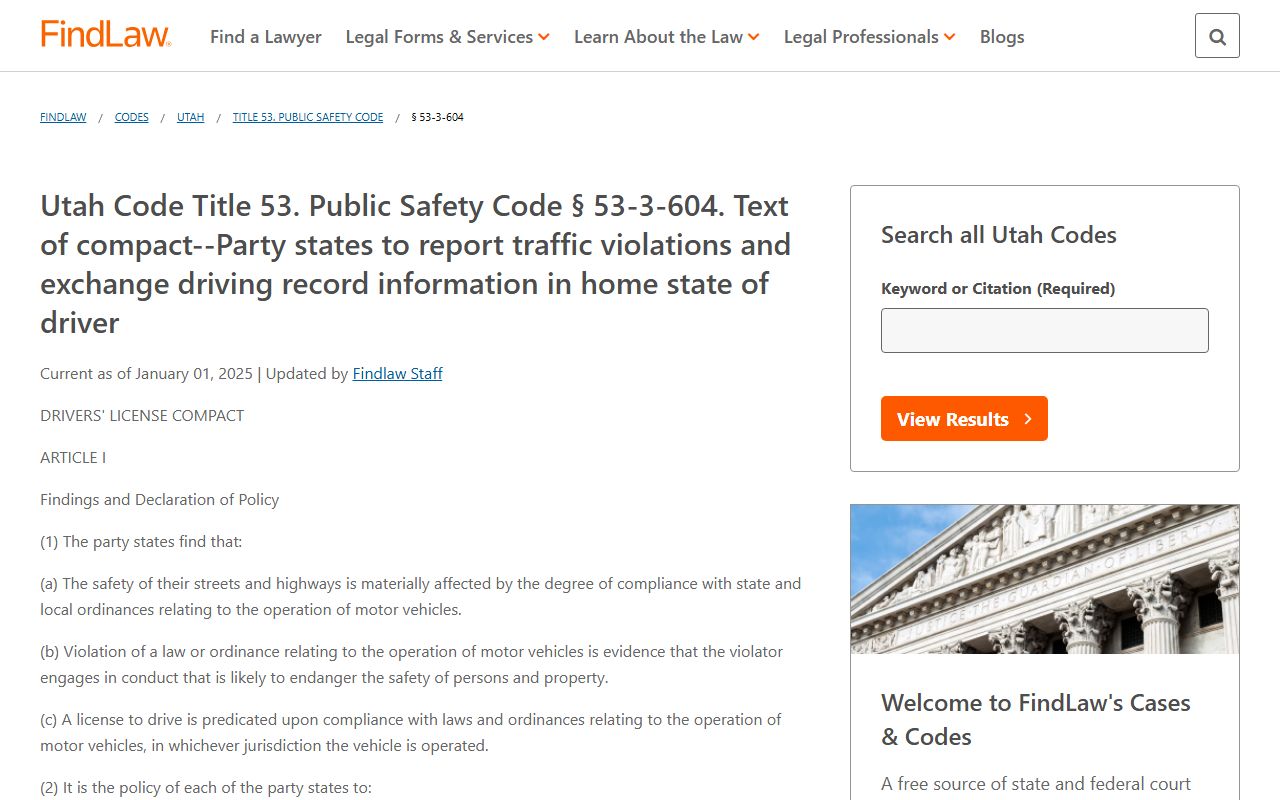
The Driver License Compact statute explains how Utah shares traffic conviction information with other states and how out-of-state tickets affect Utah driving records.
Accessing Utah Traffic Ticket Records Under GRAMA
Utah court records, including traffic ticket case files, are public records under GRAMA, Utah Code § 63G-2. Anyone can request to view these records. You do not have to be a party to the case to access traffic court records in Utah.
The courts provide several ways to access these records. Free public access terminals are available at courthouses across the state. Online access through XChange requires a subscription or per-search fee. In-person inspection is always available at no charge during court business hours. If you need copies, the fee is $0.50 per page. Certified copies carry a certification fee of $4 to $5 per document. Courts must respond to GRAMA records requests within 10 business days.
Some traffic-related records are restricted. Juvenile court records are not public. Sealed or expunged records are not accessible. Victim and witness personal information is protected. For most standard traffic citations and court cases, however, the records are open. You can also submit a formal GRAMA request in writing to any court clerk's office in Utah if you need records that are not available through the online search tools.
Note: Accident reports are available through the Utah Department of Public Safety at secure.utah.gov/accidentreport/ for incidents occurring on or after January 1, 2010.
Browse Utah Traffic Ticket Records by Location
Traffic ticket records in Utah are filed at the justice court or district court where the citation was issued. Select a county or city below to find the specific court that handles traffic cases for that area.
Utah Counties
All 29 Utah counties have courts that handle traffic ticket records. Select a county to find court contact information, online resources, and how to look up traffic cases in that jurisdiction.
Utah Cities
Major Utah cities have their own justice courts that handle traffic citations issued within city limits. Select a city to find its court information and traffic ticket resources.